Tuesday, 28 May 2013

UK church dates

After the long haul flight, a little re-acclimatisation, some time to catch up with good friends and family and the all important debrief sessions and medical check-ups, we’re now beginning to look forward to our church partnership speaking engagements. It'll be great to be able to see you all and thank you in person for your support during our first term of service in Mozambique and also to be able to share more of what God's been doing and what life is like.

Our schedule is now pretty full, so unfortunately we can't promise any additional visits, but if you can get along to any of the events listed below we'd love to say hello! 

2nd June 2013 Canterbury Baptist Church, Kent
9th June 2013  Arbury Road Baptist Church, Cambridge (morning service)
9th June 2013 Christchurch Baptist Church, Welwyn Garden City (evening service)
15th June - 16th June 2013 Upminster Baptist Church, Havering
23rd June 2013 Colchester Baptist Church, Essex
29th - 30th June 2013 Salisbury Baptist Church, Wiltshire
6th July - 7th July 2013 Brentwood Baptist Church, Essex (Saturday and Sunday evening)
7th July 2013 Pilgrims Hatch Baptist Church, Essex (morning service)
14th July 2013 St Peters and St James Churches, Hereford

For more detailed information send us an email or get in touch with the respective churches.

Monday, 15 April 2013

Ants


A close encounter
We've just come back from a break in St Lucia (South Africa) followed by the BMS Africa retreat where we all had a great time.  We’d caught up with BMS friends and colleagues, done plenty of safaris (including one in a Kayak and another on a horse).  I think we’d eaten more meat in a week than we’d eaten in the entire time since we left the UK! We’d had time for ourselves, each other and the children. Throughout the retreat we’d had great teaching from Haggai and felt ready to take on life in Beira with a fresh energy before we return to the UK in May.  We realised we’d been ground down by some of the challenges of everyday life but were determined not to be got down again.  No more moaning about potholes, no more only talking about work and no more of the complaining. More time to be spent with God, with each other and looking for the positives in every situation.  With this new energy we arrived back to our house.

The following are some of the things that had happened while we had been away for less than two weeks.

Isaac, Naomi and Sammy,
 not looking very scared at all
1. One of our guards had been severely ill with a bad bout of Malaria.
2. A dispute to the south of Sofala Province between the police and supporters of the ex-rebel group  RENAMO led to violence in which seven were killed including several police officers and tension across the country.
3. A group of organised robbers down a road where some friends live had systematically stripped parts out of several cars.

Keeping a positive outlook was already looking like a challenge and then there were the ants…

These tiny housemates have been with us for months and we had hoped they might vacate the property in our absence but no luck.  On the night we got back, we climbed into bed only to discover that they’d moved in between the covers. We stripped the bed, sprayed, and sprinkled baby powder around the bed to discourage them from returning to their new found home.  The following night the same happened in Isaac’s bed and since then the little creatures decided to make a home of our sofa whilst we were trying to chill out one evening. 

When the children are playing on the floor, the ants are there. When you cook, they’re there. When you pick up the kids toys, they’re there. To make it worse, when the ants feel threatened they bite; they may only be tiny but trust me they hurt! So much for the no complaining and the positive attitude, we've been talking about!  The plan for a fumigator to come and blight the little creatures is our current preferred topic of conversation.
Almost all of our IMC Africa friends on retreat

However, when we honestly look at things we have plenty to be thankful for. Beautiful sunshine on a daily basis, food to eat, good friends and great beaches nearby all help us to carry on with what we’re here to do. After all, it’s only a few weeks until we get to see UK friends and family and visit churches for our first home assignment.  Let’s hope the ants will take the hint and go on holiday too!

Tuesday, 5 February 2013

Prayer letter and home assignment dates

Great news, our first prayer letter of the new year is now available online! You can find it by clicking here.

Also, we'll be on home assignment in the UK and available to request as BMS Speakers from 6 June to 2 August 2013. Churches wishing to request us as BMS Speakers should use the online speaker request form at www.bmsworldmission.org/speakers or call the Church Relations Team on 01235 517600.

Please submit your request before the 18 March 2013.

Friday, 1 February 2013

Mozambique Floods

Today's blog post was written by our colleague Fiona Welsh and was posted on the BMS website earlier this week. The original BMS post can be found here. Since the post was written, the death toll from flooding in the lower Limpopo river now stands at 80 (according to Reuters news agency).

(Photo credit: Phil Hay/UN/Word Bank)
Intense flooding in Mozambique has displaced at least 150,000 people and killed 40 so far, the United Nations said on Monday, with the figure expected to rise further as fresh rains spread flooding northward.

BMS worker Fiona Welsh asks for prayer:

I'd like to ask you to pray for people affected by the recent floods in Mozambique. The rains are due to continue until the end of March so the situation could still get worse:

The flooding from the Limpopo river, which began on Wednesday, killed around 40 people and forced more than 100,000 others to flee.

Amid the catastrophe, two babies were born on roofs where their mothers had taken refuge in the southern village of Guija.

(Photo credit: Anna Wallenlind/IRIN)
The mud-filled hospital in Guija is empty, with all the furniture and equipment drying outside, while a nurse distributes painkillers to the sick and ensures the injured are airlifted to hospitals outside the area.

Local medical staff have already treated around 70 cases of diarrhoea and are keeping an eye out for cholera and other waterborne diseases. Apart from air transport, which is reserved for urgent cases, the only way to access the community of roughly 7,000 residents is by boat.

Local officials estimate that Guija will remain isolated for at least three months, the time it will take to rebuild the roads and bridges swept away by the Limpopo waters.

(Photo credit: Leonor Fernandez/WFP)
Four bodies were found in Chokwe, whose flood-ravaged streets were also littered with rotting animal carcasses.

A Baptist pastor contacted us on Monday to say that they have had 2.5 metres of rain in a few days in Chokwe.

Please pray for the local churches as they attempt to help their local communities at this terrible time.

Thanks

Fiona

Wednesday, 19 December 2012

Monday, 3 December 2012

Tuning into the sounds of Mozambique

This is just to say that we recently had an article published on the BMS World Mission website that tries to describe some of the drama of modern-day Mozambique. You can read it by clicking here or going to www.bmsworldmission.org and looking in the list of recent articles. Enjoy!

Wednesday, 7 November 2012

Tradition and responsibility: Life after death in Mozambique.


A few months ago, Mario’s (not his real name) father died. Although he was an old man for Mozambique (life expectancy is 421), the stroke was quite sudden. He was brought from his village to stay near the city not far from our house to be with his extended family, most of whom have migrated to Beira for work. In Beira he was also able to see a nurse2 but he never recovered and died about a week later.

The funeral took place on a Tuesday. A short service was held in a catholic church and he was buried in the cemetery. Back in the UK, we tend think about funerals as marking an end of a life, but in traditional Mozambican culture, the funeral is just the beginning of a series of ceremonies intended to help the safe passage of spirit of the deceased into the realm of the ancestors. The village shamans and healers play an important part in this. For example if the ceremonies are not done well enough, the spirit can turn malevolent, wreaking havoc on the family health, crops and livelihoods.

During one ceremony, the spirit chooses a family member to inhabit, joining the ancestors that live on after death in the living. Although not the eldest son, Mario was chosen to receive the spirit of his father, he said, because his father loved him the most. And with this honour came all the responsibilities due the new head of the family; no small deal for a young guy still studying.

We first noticed a change in Mario quite soon after his father’s death. He was less cheerful, less talkative and more sullen. We knew that he’d started turning up late for work but we put this all down to stress, mourning or the weight of extra responsibility.

Then one day he nearly got fired. He’d turned up for work drunk and unable to do his job. In desperation he spoke to us about his problem. Everyone knew that in life his father had liked a beer on a Friday evening, but he told us that in death the spirit of his father was making him drink away every last metical of his small salary. He knew he was in trouble but how could he reject the spirit of his father?

Whatever you believe about this kind of thing, in Mozambique the physical and the spiritual are believed to be intractably interwoven in the fabric of everyday life. Every action taken in this world is watched, judged and acted on by those that inhabit the spiritual realm. The only way to overcome a problem in this world is to also overcome the spirits who are causing it in the other.

Whether you believe Mario’s experience is a genuine one, or just put it all down to psychology, he needs to find a way of getting out of this mess whilst feeling that he is honouring his father. But in this culture passages like 1 John 4 really come into their own.

Test the spirits, writes John. If they’re from God then they’ll acknowledge Jesus, if not they’re false and therefore liers. He tells his readers that because God is in them they can overcome the lying spirits and in a twist of logic he says now that they are from God and the spirits are from the world.

We believe that through Jesus, there is a way out that both saves Mario’s job and livelihood and honours the memory of his father. Please pray for him as he begins to study his bible and discover this wonderful truth.


1According to the United Nations, Mozambique has the second lowest life expectancy in the world:
http://www.un.org/esa/population/publications/wpp2006/WPP2006_Highlights_rev.pdf

2Access to rural healthcare is very poor. There is roughly 1 nurse per 5000 people and the vast majority are based in cities and towns:
http://www.nationsencyclopedia.com/WorldStats/HNP-nurses.html#map

Thursday, 25 October 2012

'Normal'

 
As I was driving down the dual carriageway on my way into town the other week, I carefully avoided the motorbike driving at speed the wrong way and very much on the wrong side of the road. A few minutes later what surprised me was my lack of surprise. I realised how I had barely thought about the situation, let alone been shocked by the disregard for road safety laws. It got me thinking about all the things that have become ‘normal’ for us over the last few years. Here are just a few:

1. Pot holes in roads big enough to swallow a car.

2. Never ending sunshine... So much so that we often long for rain.

3. The sight of small children wandering unaccompanied along busy roads.

4. Watching an incredible amount of development, at a scary rate. For example when we arrived, Beira had one supermarket. It now has four with two of them opening up just the month gone buy.

5. Having people asking for money when you get out the car in certain zones in town.

6. Seeing all types of vehicles, from bikes to large lorries, overloaded with all sorts of items, people, animals and machinery.

7. Seeing the countryside alight as people set fire to the old season’s crop in preparation for the new.

8. Some ‘special’ clothing choices. My favourite being a man who was selling rugs at a local market dressed only in a dressing gown.

9. Neighbourhood monkeys, some wild, some kept as pets.

10. People offering to work for me as a nanny when I take the children with me shopping.

Wednesday, 10 October 2012

New prayer letter


Our most recent prayer/news letter can now be found online on the BMS World Mission website. Click here to find it if you haven't read it yet! In this letter, Christine has tried to tell the story of the car accident in some detail, sharing how God has been at work through it all.

Monday, 10 September 2012

Six months in two pages

 
Jeremias with his family

I’ve just looked to see when we last wrote a blog… I’m very embarrassed but not at all surprised! Since the last blog post our world has been a little shaken to say the least. But if I’m honest, I know I’ve been putting off writing about our life here as I’m still taking time to make sense of the country we live in and our recent experiences. Anyway I’ll do my best to fill in some of the details of the last few months.

I’m sure that many of you who follow us are aware that I (Christine) was involved in a car accident in April. Having driven for nine years without an accident it was pretty terrifying. As is so often the case here, while I was driving on a clear road with no car in front or behind me, a boy (Jeremias) of around nine years ran straight out into the car. Thankfully he is alive and despite serious injuries which originally looked fatal, he seems to be making a full recovery. This happened soon after our last blog post and affected a great portion of our time and lives afterwards.

Our language teacher at work
The time after the accident in some ways went on as normal: we’ve had Portuguese lessons every morning at the language institute and various BMS tasks to do in the afternoons as well as extra informal language on top of bringing up two lively children. But Mozambican culture dictates that we were also expected to regularly visit Jeremias who was staying in Beira hospital with his father recovering from serious injuries and waiting for various surgeries to restore him to health. It also dictates that not only did we need to visit but were also required to provide for all the needs of Jeremias as well as his family while they were staying away from their home. Although officially hospital is free here and food is provided for patients, needs of family members staying with the patient are not. Jeremias’ family had no relatives here so we became providers of food, company and accommodation as they were needed. We made cultural mistakes on the way but the family were gracious in understanding our lack of cultural knowledge.

At times we found the visiting and expectations very difficult to deal with especially in a society that says the driver of the car, whether at fault or not, has to provide for the injured party’s needs. I’m pleased to say that we have formed good friendships with Jeremias family, especially his father and that Jeremias is back near his home town on his way to a hopefully full recovery.

As part of the continued sorting out of the accident I was called to a tribunal up in Manica near the Zimbabwe border. We were reassured that this was just a regular procedure to formalise the expectations of the driver towards the injured party and their family. We received a letter telling us to be ready outside the courthouse at 9am and that failure to turn up could lead to a prison sentence! Knowing this we were nervous as to what to expect but safe in the knowledge that the proceedings, however intimidating, were to work out what the insurance company would pay out. Manica is a five hour drive from here but we decided that we could go and come back in a day so as not to have to ask a great deal of the babysitters who were looking after the children.
 
Leaving at 4am with a friend, Camica, who had kindly said she would translate for me we started out to Manica. The thick fog on the dark roads did not help my nerves but Camica, happily chatting away despite the hour, was a real blessing. We picked up Jeremias’ father and mother on the way and continued to the courthouse. Arriving early, we handed in our paperwork and waited to be called. Here I got a huge lesson in patience, a seven hour lesson to be precise. Eventually we were called. I think the Judge was as hungry for his lunch as we were by this time and didn’t even open the paperwork provided by ourselves and Jeremias’ family which explained what had happened. He assumed as with most motorists here that I had simply run away and had been caught by the police at a later date. Needless to say, proceedings did not go exactly smoothly: I was refused a translator, told I was a bad person, and then the case was thrown out as we needed to wait for a final report on Jeremias’ health which would be more likely to come along in January 2013. With the insurance company lawyer not even being given permission to speak we decided to go out for a late lunch all together. After a long day we drove back to Beira arriving to find the house still enshrouded in darkness from the longest power cut we’ve had since we’ve been here (over 48 hours). I can’t say it was one of the best days in my life but I was very thankful for all the friends and family both here and back in the UK who supported us with practical help, prayers and messages.

A cafe: the most important stop on a guided tour of Beira
I could say that since then life has continued as normal and so it has in a manner ‘normal’ to life here. Soon after the accident my Mum came to visit and was amazed at how long everything takes. Getting money out the ATM seems like such a simple task but does rely on the ATM having money in it and working! Sorting out a small issue should just be a short phone call but is often hours spent sitting in an office, followed by collecting of documents that need signing and stamping which then involves sitting in another office for hours waiting for the official person to stamp your papers. So life goes on.

We have finally finished our formal language studies and are officially fluent in Portuguese at least if not in reality. We still make plenty of mistakes but can generally say what we need to say and understand what needs to be understood. As I’m still learning new words in English I’m sure our informal study of language will never end. We marked the finish of our language study with a visit from Geoff’s parents and my cousin, Jen. We took some well-earned holiday, showing them around Beira cafes as well as going to Savane Beach resort for a few days followed by a visit to Gorongosa National Park where we were privileged to see a lion as well as some elephants pretty close up.

The last few months have probably been some of the most trialling we’ve been through, however, as formal language is over it’s back to a slightly different type of work. I’m starting to visit some of the church pre-school program as Geoff starts looking at how to practise some of the basic farming techniques he has leant on a ‘Foundations for Farming’ course in order to help some orphanages in the local community provide their own food.

We’ll keep you updated with our progress.


Wednesday, 28 March 2012

A New House and Ancient Customs

Our house (panorama)
Our new house
Many of you know that over the past 6 months, we’ve been looking hard for new house with space for us as a family, a garden, rooms that could be used as guest accommodation and a little office space. Whilst the search has been going on for what has seemed like ages (we’ve now become self-confessed experts at guessing exactly how ridiculously high the rental price might be for property in Beira) last month, at last, we managed to move into a fantastic new house.

Discovering that it’s actually cheaper to live in a $100 a night hotel than rent an average 4 bedroom house in good condition in the city, we’d begun to look in an informal residential area on the outskirts called Manga (literally meaning ‘mango’, I’d guess because there’s a lot of mango trees around).  Manga has a very different feel to the city and here cultures new and old collide. People commute into the city on the minibus taxi service that run up and down the main tarmac road whilst at the same time filling their gardens with rice or maize to sell and eat.

It’s a beautiful area and we have a fantastic house with a garden full of fruit trees, bananas and vines. The only slight disadvantage of living here is that mains water is turned off each evening (we have plans to make our garden well water drinkable) and electricity is much more unreliable.

Although summer is slowly petering out, nights are still pretty hot and sticky so we all sleep in the blast of an electric fan. This overpowers much of the noise from outside, but during a power cut, the night noises reveal something of a hidden side to Mozambican life.

Mozambique tree sunsetWithout the fans and muted behind the screeching cacophony of crickets and frogs, we sometimes hear drums: fast flowing hypnotic and repetitive rhythms beating out into the dead of night. This is the sound of the Tradição (traditional beliefs) and the drums are one of the tools of the curandeiros (traditional healers) intent on calling a spirit into conversation. His (or her) plan is not to expel the spirit out of the person he is trying to help, we’re told, (after all, where would it go?) but to find out why it is angry and tormenting the person it is residing in, and discuss with it, in its own language, just how it might be appeased.

The drums are just one aspect of the Traditição that is alive and strong in Mozambican culture. Any exploration around the base of a prominent old tree or termite mound may reveal fetishes (gifts given to the ancestral spirits that live there). These take the form of half buried clay pots that contain the ingredients of mysterious spells: chard cloth, bones, ash etc. This is the work of the fetiseiros (witch doctors); the charms are intended to bring illness, misfortune and even death to the unfortunate victim.

Mozambicans are a fantastically warm and friendly people, but if you scratch beneath the surface you'll find a deep undercurrent of very real fear. If someone does well for themselves, if their crops or goats do a little better, if they start to make money for themselves, they fear the possibility of being cursed for it by jealous neighbours.

The challenge for anyone working in development in Mozambique is that before you can have any conversation about improving the quality of local peoples’ lives, you first need to face this atmosphere of fear. We believe this can only be achieved by a loving God who is so much bigger than fear and jealousy.

Saturday, 24 March 2012

The British and the Weather


Manga in the rain 1
Neighbours' children playing after the rain
It’s been a very long time since our last blog post, but in that time we’ve moved house, passed level 2 Portuguese and had no less than three colleagues staying with us including the intrepid Brad and Ruth Biddulph (BMS Zimbabwe) and our first BMS Mozambique team member, Annet Ttendo. Geoff has travelled as far as Harare in search of a good answer to mulching maize and I (Christine) have discovered that, after days and days of ridiculously hot weather (i.e. a heat index over 50°C), I need a jumper on as soon as I go anywhere with air conditioning!

Well, this takes me nicely onto the theme of today’s post…

I thought when I left Britain that the standard conversations about the weather were firmly behind me.  After all, what is there to discuss in a country where the weather apparently alters very little beyond day after day of glorious unbroken sunshine?

So you can imagine my disgust that nearly every day here in Mozambique there is some sort of discussion about the weather. What’s more, the weather is linked to everything: It’s the cold in winter (25°C) that means that you have a cold (of the runny nose variety). Of course, the summer heat causes the same.  In winter, people cannot be found outside their houses because of the cold; in summer they’re at home resting because of the heat.  And of course, you should all be warned of the dangers of wearing a red top in a thunderstorm (it’s fatal, you know!)

Manga in the rain 2
Our kids have the same idea!
However, the ‘hot’ weather topic at the moment is no different from back in the UK:  RAIN, RAIN, RAIN!  Recent comments include: ‘It’s been too long since the last rain’ (the rains have been very late this year), ‘The amount of rain received is too small’ (i.e. it won’t help the crops), ‘The amount of rain received is too big’ (i.e. the dirt roads are flooded and cars keep getting stuck in mud).

After our last blog post, far too long ago I apologise, we are pleased to say that actually rain has at last started to arrive and just in time for some of the wilting rice in the fields. And so far not too much flooding!  Yes, there is the occasional car stuck in mud but overall things aren’t too bad and I haven’t heard of people sleeping on their dining tables yet (which is what happens when houses flood properly.)

To finish I feel I must give a short update about the cyclone that affected people that live just a short way from Beira.  We were delighted to hear that the local government had given some seed to affected areas near us and although the rains have been late this year I guess it means the late planting of crops was not as disastrous as it could have been. We thank God for the way in which people have begun to rebuild their lives.

I think that is enough weather talk for now.  So what is the weather like there?  Is it spring yet?

P.S. Brad and Ruth’s most recent blog post says a little about our life in Beira, if you’re interested, you can find it by clicking here.

Wednesday, 25 January 2012

Tropical Storm Hits Mozambique

Greetings again from a hot and humid Mozambique. We know that most of you who read and follow our blog live in the Northern Hemisphere and, as your winter drags on, might find yourselves slightly envious of our summer heat. But it’s not all glorious sunshine here. There had been no sign of the rains (which normally start in November) and everyone has been waiting with bated breath for a break in the sweltering heat and some cooling water for their crops. That is until last weekend.


Today's satelite image of the storm (NASA from wunderground.com)
Over the weekend, we had our first experience of a tropical cyclone as a category 4 storm, nicknamed ‘Funso’ hit the Mozambican coast. Associated Press say that at least 10 people in Mozambique have been killed, and thousands of people have been driven from their homes. Many crops and homes have been destroyed and roads and bridges are now impassible. Winds have gusted well over 150kph. Here in Beira we’re still cut off from the capital city, Maputo. Today’s ‘Diario de Moçambique’ newspaper reports that 12,000 are currently homeless.

As the storm skipped past us further out to sea on Sunday night (we were up trying to comfort Isaac as thunder crashed overhead) it was little more than an inconvenient sleepless night. Please pray for our partners, the Convenção Baptista de Moçambique who are currently planning how best to help those who have been left homeless and cropless just the other side of the nearby River Pungue.

Tuesday, 3 January 2012

A Post Christmas Blog Post

IMG_0459
Christmas, Southern Hemisphere style!
Besides the odd street hawker with a few bits of tacky tinsel and the odd plastic Christmas tree in the super market, the usual build up to Christmas we’re used to just doesn’t exist in Mozambique. There were a few manic days of shopping and we heard reports of ‘Shoprite’ being so overrun that people were opening packets and eating food off the shelves but with Naomi stuck for three days in the clinic we even managed to miss that! Food prices did go up but there was none of the usual manic advertising or cheesy renditions of ‘It’s Chriiiistmas!’ we’re so familiar with.

IMG_0572We had decided that to avoid too much homesickness we would get together for the Christmas period with our friends and BMS colleagues Brad and Ruth Biddulph  who are based in Zimbabwe (click here to find their blog). After Naomi left the clinic we agreed that a night away from Beira was definitely in order, so on Christmas Eve we packed up a few bits and headed off to the local beach resort of Rio Savane where we booked to stay for one night. Although none of us felt particularly Christmassy, Ruth and I sang cheesy Christmas songs as we bumped down the dirt road in an attempt to invoke a sense of the season… I think we managed to invoke several headaches instead.

We were staying in a basic thatched ‘cabana’ which consisted of low walls, a thatched roof, a cement floor, a little mosquito netting and a BBQ outside. Shortly after arrival Geoff set about our first ‘braai’ of holiday season: sausages, burgers and fresh pineapple. It was all eaten with a minimum of bread to ensure there was plenty of stomach space for more meat! All fed and watered we headed off to the beach where we found some shade and set about tackling the enormous waves in the warm sea or playing in the sand with the children. The hours flew past and before we knew it, it was time for more food. Tucking into prawns at the restaurant with no mince pies in sight, we watched the sun set behind a palm tree vista as we slapped on the insect repellent. After the kids were tucked into their mosquito tents we sat outside and played games in the balmy heat under a star-filled sky.

IMG_0547IMG_0537

Thinking it might be an early start, we decided to turn in and crawling into our tents (Geoff and I sharing with a child each) we discovered that inside these nice cosy tents it was pretty warm and I think I can safely say we all sweated more than we slept! The advantage of this was that we all saw the Christmas Day sunrise, although through some fairly groggy, grumpy eyes.
IMG_0553IMG_0559

After stockings had been opened and a breakfast of bread and fresh lychees consumed, we were off to the beach again. This time the waves were not so big and the children had a great time running in and out of the sea and playing in the shallow pools which were as warm as a bath. As soon as the children (and possibly Brad and Ruth) went for a nap in the shade, Geoff and I set off up the beach to a fishing village to haggle for some fish we had just watched being brought in. We realised that this rundown ramshackle hamlet with its simple thatched houses was much closer to the reality of Jesus’ birth than the over-stylised, halo-clad, oxen filled nativity images we see so often.

IMG_0521Soon it was time for our turkey (meaning the fish and prawns we’d just got from the fishermen cooked on the fire) and then back to Beira to Skype family. It was strange to be sitting in the sticky heat of our flat watching our families having the type of Christmas day we’re so familiar with, but it was great to feel just a small part of that world. As the children opened their presents from grandparents the day started to feel more familiar...

Friday, 23 December 2011

Naomi

We are pleased to say that Naomi is back home from hospital and just has to continue antibiotics, no one has told her shes ill so she's currently chasing Isaac all over the house.

Wednesday, 21 December 2011

Thanks so much for your emails and messages.  Naomi is a bit better this morning but still needs to stay in the hospital/clinic for a few more nights.  Your prayers are appreciated.

Thursday, 24 November 2011

New prayer letter


If you haven't read it already, our October prayer/news letter is now available online at the BMS World Mission website. Click here to have a read. Many thanks again for all your suport and prayers!

Thursday, 10 November 2011

Church Party

It started a few weeks ago with instructions after the service: men, women and youths were to get together into their separate groups immediately. While the children continued to play wherever they happened to be, Geoff and I were guided in the correct directions and we sat in our separate groups trying to understand what was going on. For me, the women’s meeting opened and I was aware of a lot of discussion about cows and the best place to buy one, followed by more discussion about different types of food (food words I have somehow picked up more easily than others).  My helpful friend explained that there was to be a big party in a few weeks’ time to celebrate the pre-school PEPE project supported by BMS, the anniversary of the church as well as a celebration for the Pastor. All in all, it was to be a big event. Then, as the women started putting their hands up and saying what they wanted to contribute, all I saw was a cultural minefield ahead of me… Fortunately, I was saved at the last moment as some women were now telling others what was needed and I duly volunteered to buy whatever they wanted me to. After some discussion and amusing miming to explain the word ‘flour’, I was all set.  I went out to discover that Geoff’s meeting had finished a while beforehand: the guys had done some maths, worked out what money everyone needed to contribute and that was that, they were done.

A few weeks later, our donations in, it was the day of the party. As it was a three-fold party, each aspect was celebrated in style including traditional Sena (local language) music from the choir, R&B from the youth, dancing and presentations from the children, short Bible messages and so on. At one point, we had a long queue to greet and congratulate Pastor (in which somehow we ended up in the youth section of). At another point in the service, Isaac also ended up in the wrong place, and found himself at the front of the church as part of PEPE. We’d like to say that no one noticed but I’m not sure that’s true!

The few working fans did little if nothing to alleviate the heat in the church as the sun warmed the tin-roof like an oven. Whilst the service was amazing, I must admit I was relieved to have the excuse of the children which allowed me to listen to a lot of it from outside. There, sitting with other mums where there was a gentle breeze now and then and I made the most of the opportunity to dive home and collect another couple of litres of water after we had ran out of the first lot.  Geoff braved the whole service in the church and is now claiming to be fully acclimatised to the Mozambican summer (40°C plus and 85% humidity). He was especially pleased with himself when the Mozambican next to him left claiming it was too hot!  When the four hour service was over we all crossed over the road for a spectacular lunch (in which there was no whole cow to be seen as was my original concern). I sensibly chose to sit outside with the women so that the children could run around whilst Geoff was absolutely delighted to be sat inside again. Fortunately, this was a much cooler building and he did get to sit on a chair and eat from a table.  We all enjoyed a delicious lunch and Geoff was even part of the cake cutting party because, as we then discovered, the day was also partly to celebrate international missionaries. Having had the cake cutting ceremony we decided to return home with some very happy but tired children. In fact, they were so tired that they didn’t even mind missing out on the enormous cake! We think that’s a first.

Wednesday, 12 October 2011

A picture is worth a 1000 words.


A great view of Beira with the city skyline, Mozambique Channel and the mouth of the Rio Pungue clearly visible
We realise that this has been the  biggest gap between blog entries yet, but we have our reasons, not only has one of our bosses been here but my (Christine’s) parents came to stay for three weeks which was great.  We thought having been here only four months that our eyes were still open to seeing all the ways of life here that are different from what we were used to in the UK,  and we are definitely learning new things all the time.  However, with my parents we realised that we are starting to take some things to be normal that maybe we wouldn’t have before.  For example, my Dad was amazed at the number of people walking down the central reservation of a dual carriageway, my Mum was astonished by the sheer amount of stuff a woman here is capable of carrying on her head (whilst having a baby strapped to her back of course).  Things or situations that we have got used to they both found astonishing, for example the amount of people that can squeeze onto the back of a lorry, live goats tied to trucks to be transported and how enterprising people with limited resources can be.  Rather than try to explain what we think they saw as they stayed here we feel it would be more appropriate to give you a visual tour of what they saw.  And besides, Dad took near to 3000 photos so we might as well use some of them! 
The Plaza de Municipal in the city centre has strong a Portuguese cafe-culture feel
A typical streat in downtown Beira
Beira is full of very random sites like this plane in the subburbs. No one seems to really know how it ended up here...
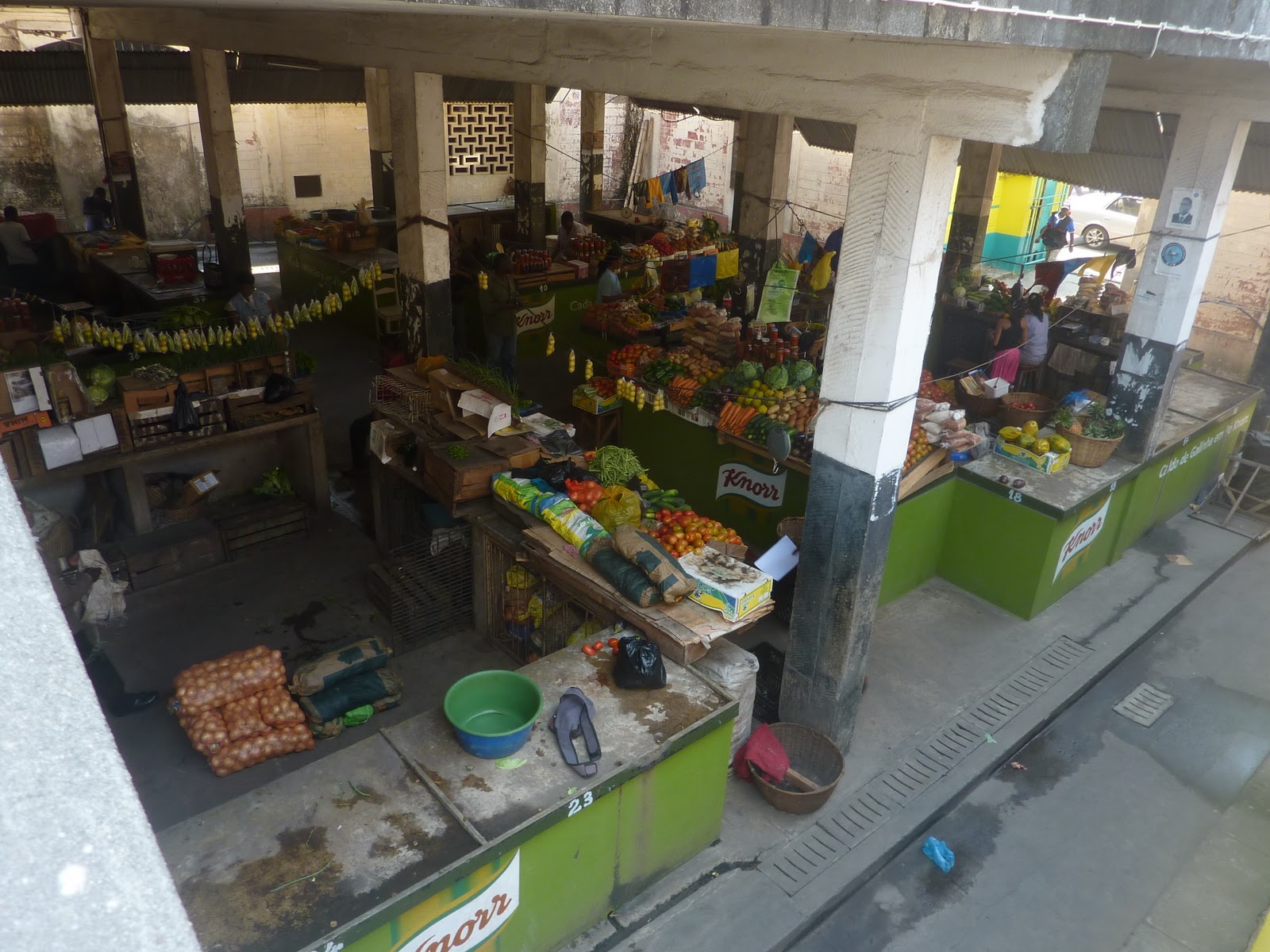
Central Market is a great place to buy fruit and veg

The lighthouse at Macuti with the rusting remains of a Portuguese trawler
One of the very few tarmac roads, the EN6 is Mozabique's M4 and links Beira in the east with Zimbabwe in the west
As soon as you leave one of the very few highways, the vast majority of Mozambique's roads are dirt tracks like this. A 4x4 is an absolute necessity for driving outside the city
A 4x4 is well beyond the reach of most Mozambicans so many aspire to own a bike (if they can afford the  yearly licence, that is and yes, you did read that correctly!)

Sometimes, when the tide is up in the mangroves, not even a 4x4 will help you out!
Tropical paradise, Serra da Gorongosa


One for all you travel agents out there!

A type of Mozambican wildlife we've come quiet familiar with... Mataquene (at the end of the needle point) live in dust. If they get the opportunity, they love to burrow into your feet where they pupate and lay eggs. Digging them out is not for the faint hearted!  


Sunday, 11 September 2011

Some lessons of Mozambique (and human nature)

Beira city-centre skyline
The following are tips we have learnt whilst living in Mozambique:

1. Men must always wear shoes (not flip flops) to church.
2. Always give and receive with your right hand.
3. Always reply to a request with the answer ‘yes’ even if you have no intention of doing it.
4. Offer any food you have if there are other people around.
5. Smiling goes a long, long way.
6. Make sure your thighs don’t show.
7. Beeping your car horn is a polite way of letting others know you are around. 
8. You're considered 'a youth' until you are 35 years old (a bit strange when life expectancy is 48...)
9.  Despite being a Portuguese colony, you drive on the left... ish.
10. Forget queuing! When waiting in line, stand as close as possible to the person in front and push in front if you get an opportunity.

Whilst at times it seems there are endless cultural things we are yet to learn, occasionally events cut across cultures. Here are two not so serious examples: 

Not that long ago, we were waiting for a driver to reverse out of a car parking space. The driver was taking ages and doing a very bad job of it. Nearby was a car park guard and we gestured a shrugged enquiry as to why the driver was having so much trouble with a simple manoeuvre. Through a hand gesture that was universally recognisable (but slightly awkward to describe in writing), he explained that the only problem with the vehicle was that it had a woman driver! Maybe a Mozambican Number One Ladies Driving School would go down well here...

Isaac helping clear a machamba (field) at a friends house
So, having insulted women drivers everywhere, it's probably only fair to give another story relating to perceived failings of Mozambican men. On another occasion, we were chatting to Dona Louisa, desperately trying to explain the importance of Isaac helping around the house in order that he understands that household jobs are not just for women. She heartily agreed, but quietly turned to Christine when Geoff wasn’t listening to point out that although this was a good theory, everyone knew that all men were worse than totally useless when it came to things like this.


We're aware these stories are a bit tongue in cheek, but finding common ground in the little things of life helps to remind us just how much of human life can cut across culture. Pray that we continue to find common ground with others as we get to know our neighbours living in very different circumstances here on the Mozambican coast.